The Price of a Cannabis Permit: How Baldwin Park Became the Center of a Political Bribery Network
Federal cases reveal how a city’s marijuana licensing program attracted corrupt payments, political intermediaries and public officials from across Southern California.
Federal cases reveal how a city’s marijuana licensing program attracted corrupt payments, political intermediaries and public officials from across Southern California.
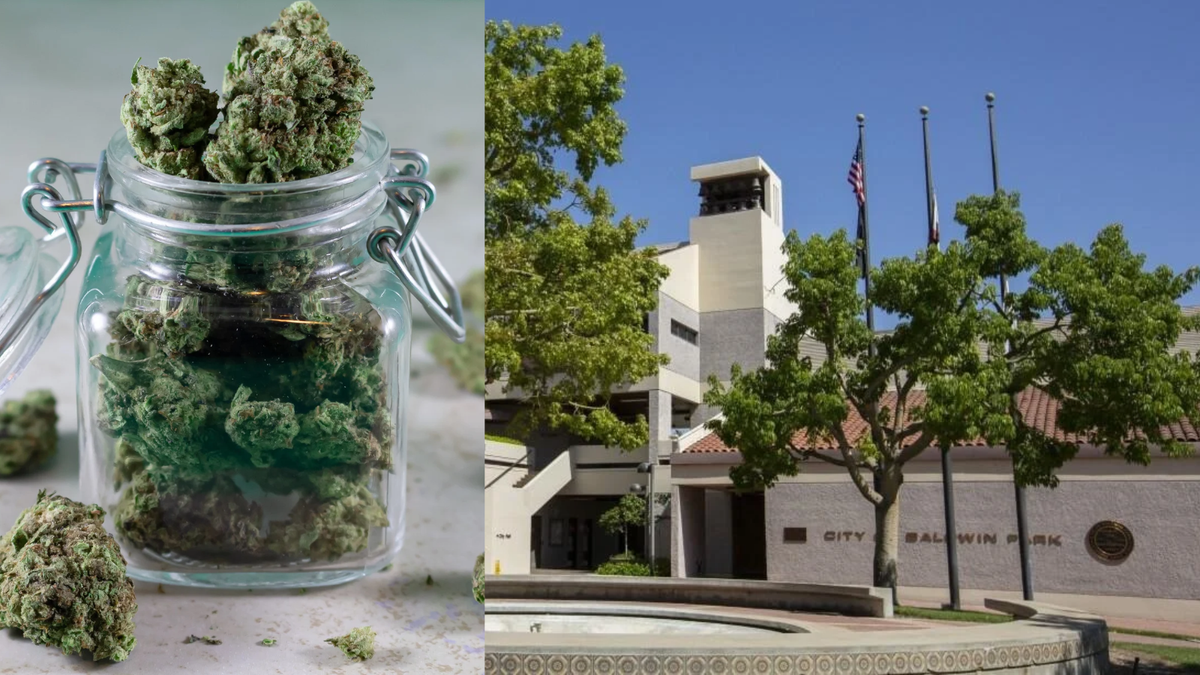
BALDWIN PARK, Calif. — When Baldwin Park opened its doors to commercial marijuana businesses in June 2017, the city created a potentially lucrative opportunity for companies seeking a foothold in California's emerging legal cannabis industry.
For some seeking permits, however, the price of doing business went far beyond application fees, regulatory requirements and ordinary consulting expenses.
Federal prosecutors say former Baldwin Park City Councilmember Ricardo Pacheco turned his influence over the city's cannabis permitting process into an opportunity to collect bribes. Other public officials and political intermediaries helped arrange payments, conceal their origins and secure favorable government decisions.
The resulting corruption cases would eventually implicate a former Compton councilman, a former San Bernardino County planning commissioner, a former Commerce city manager, Baldwin Park's former city attorney and private business interests seeking marijuana permits.
What began as a municipal licensing program became the center of a federal investigation into the sale of political influence.
The opportunity created by legalization
Baldwin Park began permitting commercial marijuana cultivation, manufacturing and distribution in June 2017.
Businesses hoping to enter the industry needed city approval, including development agreements and related permits. Those approvals could determine whether a company could establish a profitable operation.
According to federal prosecutors, Pacheco began seeking payments from applicants soon after the city launched its permitting program.
In exchange, he offered something that money could not lawfully purchase: his official vote and political influence over the city's approval process.
Pacheco had served on the City Council since 1997. His long tenure gave him an established position in city government at a time when cannabis businesses were competing for access to a newly authorized market.
Federal court proceedings would later reveal that Pacheco was not acting alone.
The middleman from San Bernardino County
One of the central figures was Gabriel Chavez, a former San Bernardino County planning commissioner from Upland.
Chavez operated Market Share Media Agency, a Claremont-based internet marketing business.
According to his federal plea agreement, Chavez agreed to serve as an intermediary between marijuana businesses seeking Baldwin Park permits and Pacheco, who could help secure their approval.
The arrangement provided a mechanism for moving money without having businesses pay Pacheco directly.
Prosecutors said Pacheco and Chavez agreed to divide the payments, with Pacheco receiving 60 percent and Chavez retaining the remainder, principally for facilitating the transactions.
Between August 2017 and March 2018, Chavez received at least $170,000 connected to two marijuana businesses identified in federal records as Marijuana Company 3 and Marijuana Company 4.
Of that amount, at least $125,000 came from one company, while at least $45,000 was received on behalf of the other.
Chavez admitted paying Pacheco between $80,000 and $93,000 in cash.
The payments were not ordinary consulting fees. According to the Justice Department, they were bribes intended to influence Pacheco's votes and his efforts to obtain support from other councilmembers.
The two men also used coded communications. In one January 2018 text message, Chavez referred to bringing documents when, according to his plea agreement, he was communicating about delivering cash.
Pacheco voted in favor of permits for the two businesses in December 2017 and May 2018.
Chavez was appointed to the San Bernardino County Planning Commission in June 2018. He resigned that November after the FBI searched his home.
He later pleaded guilty to federal bribery.
A city contract becomes part of the arrangement
The Chavez case also exposed how the corruption network reached beyond Baldwin Park.
Federal prosecutors described a $14,500 no-bid contract awarded by the City of Huntington Park to Chavez's marketing business.
The contract was signed by another public official identified in court records as Person 14.
According to Chavez's plea agreement, the contract represented, in part, additional compensation for his role in facilitating a bribe connected to a Baldwin Park marijuana permit.
Prosecutors also described a $5,000 check made payable to a church associated with the school attended by Pacheco's child.
These transactions illustrated how payments could move through consulting businesses, municipal contracts and third-party organizations rather than directly from an applicant to an elected official.
They also expanded the geographic reach of the investigation.
Although the permits were being sought in Baldwin Park, the individuals and financial arrangements involved other Southern California jurisdictions.
A Compton councilman enters the picture
Another scheme involved Isaac Galvan, who served on the Compton City Council from 2013 to 2022.
Galvan provided consulting services to W&F International Corp., a Diamond Bar-based import-export business owned by Yichang Bai of Arcadia.
W&F wanted permission to operate a marijuana business in Baldwin Park.
Rather than relying solely on the city's established approval procedures, Galvan facilitated payments to Pacheco in exchange for his support.
Galvan later admitted facilitating $70,000 in bribes from Bai to Pacheco.
Pacheco voted in favor of W&F's marijuana permit in June and July 2018 and later supported the company's proposed relocation.
Federal prosecutors described deliberate efforts to obscure where the money originated.
Bai collected checks from third parties who owed him money, leaving the payee lines blank. Those checks were passed through Galvan to Pacheco, concealing the connection between the payments and the company seeking city approval.
The arrangement allowed money associated with a permit applicant to reach a public official without the checks necessarily identifying the business as their source.
Another request for money
The financial demands did not end with the initial permit approvals.
After Baldwin Park approved W&F's relocation, Pacheco contacted Galvan seeking additional money for a legal defense fundraiser.
Galvan told Bai that Pacheco wanted $25,000.
Bai agreed to provide $20,000 instead.
According to federal prosecutors, Bai supplied seven checks drawn from different bank accounts that did not belong to him or W&F.
Galvan arranged for the checks to reach Pacheco as additional payment connected to his official support of the company's marijuana permit.
The scheme demonstrated how an official's leverage could continue after an initial permit decision, particularly when businesses still depended on city approvals and favorable government action.
Galvan pleaded guilty in December 2025 to federal program bribery and tax evasion. Prosecutors also established that he failed to report approximately $560,525 in income over four tax years.
On August 24, 2026, Galvan was sentenced to 18 months in federal prison and ordered to pay $323,557 in restitution.
Bai also pleaded guilty to conspiracy to commit federal program bribery. He received a 20-month prison sentence and a $3,000 fine in July 2026.
The city attorney and the Commerce connection
The federal investigation also reached two senior municipal officials whose positions gave them influence over government operations.
Robert Nacionales Tafoya served as Baldwin Park's city attorney from December 2013 until October 2022.
Edgar Pascual Cisneros served as Commerce city manager from November 2017 until December 2023.
Both pleaded guilty to federal bribery offenses.
According to the Justice Department, Tafoya helped facilitate the scheme involving Galvan and Pacheco.
Cisneros admitted helping another company obtain a Baldwin Park marijuana permit through approximately $45,000 in bribes. Federal prosecutors said the company had promised Cisneros at least $235,000 to help secure the permit and related approvals.
Tafoya also pleaded guilty to tax evasion involving approximately $650,000 in federal tax liability.
Their involvement underscored a central feature of the corruption investigation: the transactions were not confined to a single councilmember accepting cash.
The cases involved people who held elected office, occupied senior government positions or operated businesses capable of moving money and arranging access to decision-makers.
In December 2024, federal prosecutors publicly unsealed the Cisneros and Tafoya plea agreements, revealing additional details about the network.
The FBI investigation and guilty pleas
Pacheco's own criminal case began to emerge publicly in January 2021, when federal prosecutors announced that he had pleaded guilty the previous June to federal program bribery.
That conviction arose from a separate scheme involving payments connected to a Baldwin Park police association contract.
As prosecutors unsealed additional court records, they disclosed Pacheco's admitted involvement in the marijuana permit schemes.
Pacheco, Chavez, Tafoya and Cisneros agreed to cooperate with federal investigators as part of their respective plea arrangements.
The cases were investigated by the FBI and IRS Criminal Investigation.
By August 2026, Pacheco and Galvan had both received 18-month federal prison sentences.
Pacheco was also fined $10,000 and ordered to forfeit $219,755.
The prosecutions established that government approvals had been influenced by criminal payments and that several participants had used intermediaries and concealed financial arrangements to facilitate those transactions.
The larger question for local government
The Baldwin Park cases illustrate a vulnerability that can arise when valuable government approvals depend on the votes and discretion of a small number of public officials.
The city had legal authority to regulate commercial marijuana businesses. That authority did not permit officials to sell their votes or solicit payments from applicants.
The federal cases show how the distinction was violated.
Consulting arrangements became channels for bribes. Third-party checks obscured the sources of money. Officials from different jurisdictions participated in arrangements tied to decisions made by the Baldwin Park City Council.
The criminal proceedings establish misconduct by the individuals who admitted their roles. They do not establish that every cannabis applicant, city employee or official involved in Baldwin Park's permitting program participated in corruption.
But the documented schemes raise questions that extend beyond the defendants: What safeguards existed to detect undisclosed financial relationships? How were applicants evaluated? And could city oversight have identified suspicious arrangements before federal investigators intervened?
Those questions deserve attention in any municipality where elected officials exercise substantial discretion over valuable development approvals.
For Baldwin Park, the federal convictions provide an unusually detailed record of what happened when that discretion was abused.
For other California cities, the case offers a warning about the consequences of allowing political influence and private payments to intersect.
California Unsealed is examining additional government records concerning the officials, financial arrangements and municipal decisions associated with the Baldwin Park corruption investigation.